Skip to Main Content

Abry Partners

Abry Partners is a Boston-based private equity firm managing over $5B in capital across multiple fund strategies. Their website, abry.com, is evaluated by institutional investors, potential portfolio companies, and prospective team members, all of whom arrive with very different information needs and very high expectations. The challenge was to update the site's structure to serve the people who mattered most to the business.


The Problem

The existing abry.com had three main issues. First, the visual design felt misaligned with the firm's market position of managing billions of dollars in capital, instead looking like a mid-tier online consultancy. Second, information architecture made it difficult to navigate due to content additions that were not fully thought through. Third, the site was effectively unmaintainable, the internal team had to route every content update through a developer, creating delays around time-sensitive things like news, portfolio listings, and leadership bios.

Discovery & Approach

Before opening a design file, I needed to understand who was actually using the site and what they needed from it. Through conversations with the client and project manager, three primary audiences were identified:

  • Investors and LPs evaluating the firm's track record, fund scale, and investment focus.
  • Potential Portfolio Companies researching whether Abry is the right capital partner.
  • Prospective Hires Evaluating the firm as an employer.

Each audience had different entry points, different questions, and different definitions of success. The IA needed to serve all three without any single group feeling like an afterthought. I also reviewed competitive Private Equity firm websites to understand the conventions of the category, researching what institutional-grade looked like, what patterns investors expected to see, and where the opportunity was to differentiate while still feeling credibly professional.
Key Design Decisions

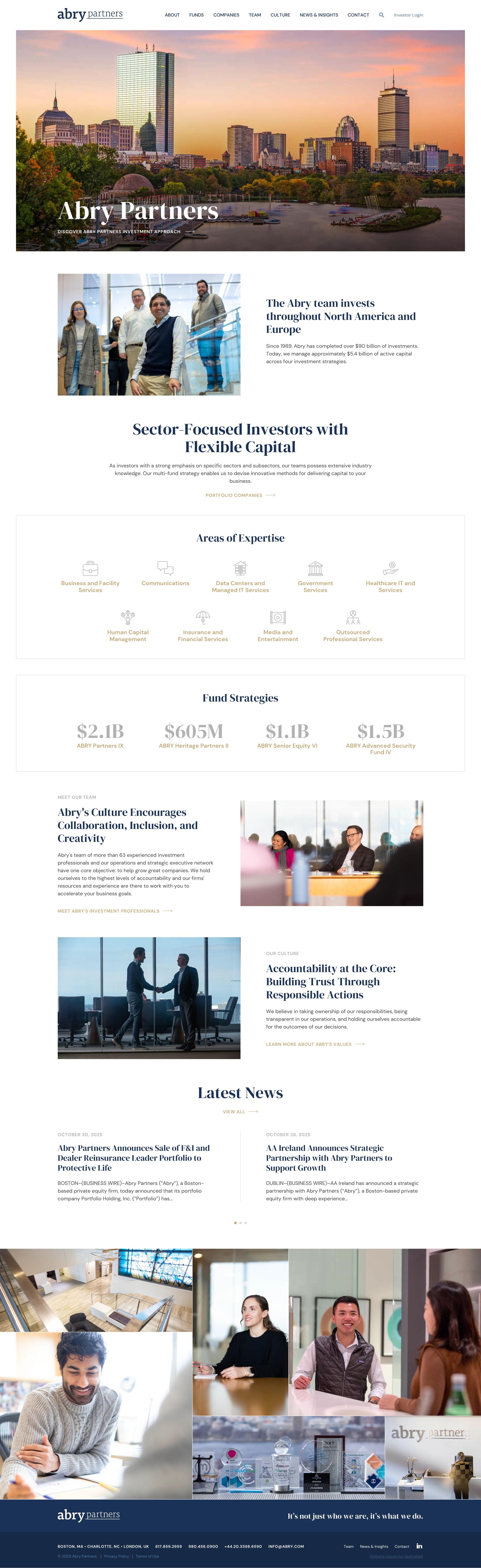
  • Restructuring the information architecture around user intent, not org structure. The original site was organized the way the firm thought about itself internally. I restructured it around what each audience needed to find, with clear pathways to fund strategies, portfolio, team, and culture from the homepage.
  • Making fund scale immediately legible. Abry manages $2.1B, $605M, $4.1B, and $1.5B across four strategies. These numbers are the fastest possible credibility signal for an investor audience, establishing scale and track record in seconds. I designed a scannable fund module that leads with these figures prominently, rather than burying them in body copy.
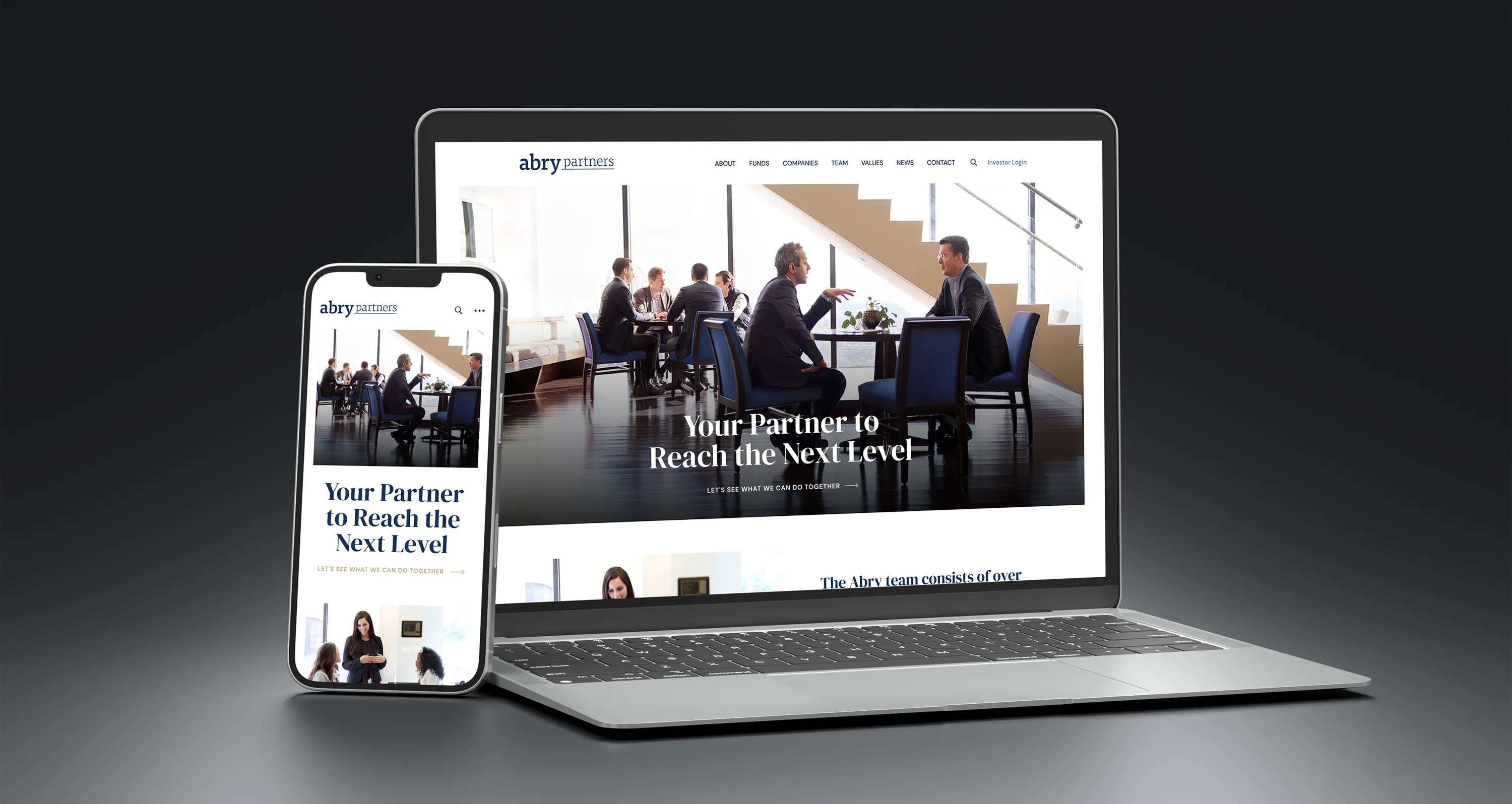
  • Choosing a visual language that earns trust before the user reads a word. Private equity is a high-trust category. I made deliberate choices through controlled typography, a restrained color palette, and high-quality photography of real people and real places to create a design that felt level to the caliber of investors Abry was trying to reach.
  • Building a modular CMS architecture for internal independence. The WordPress build was designed around content types that the Abry team could update without developer involvement, like news articles, portfolio listings, team bios, and key stats.
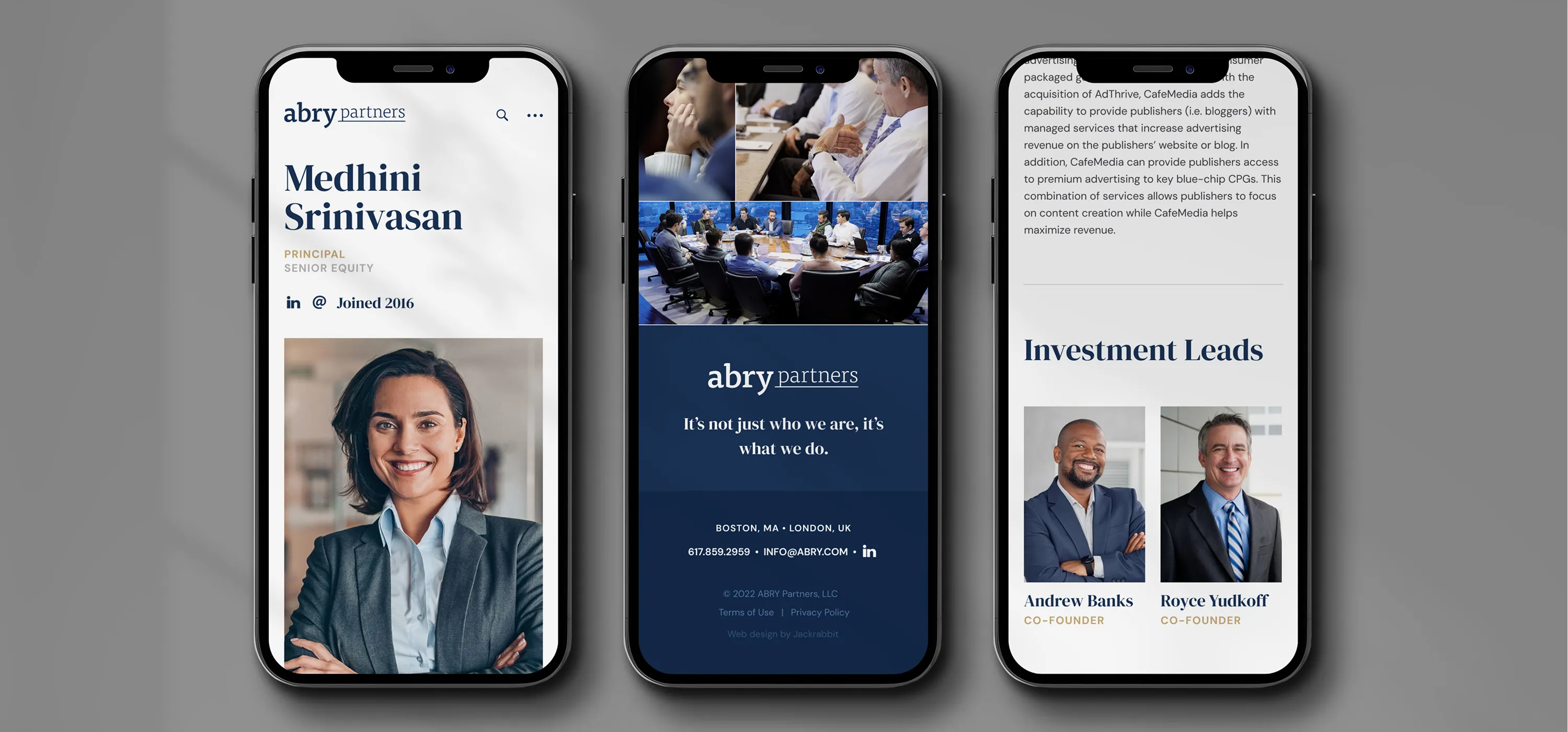
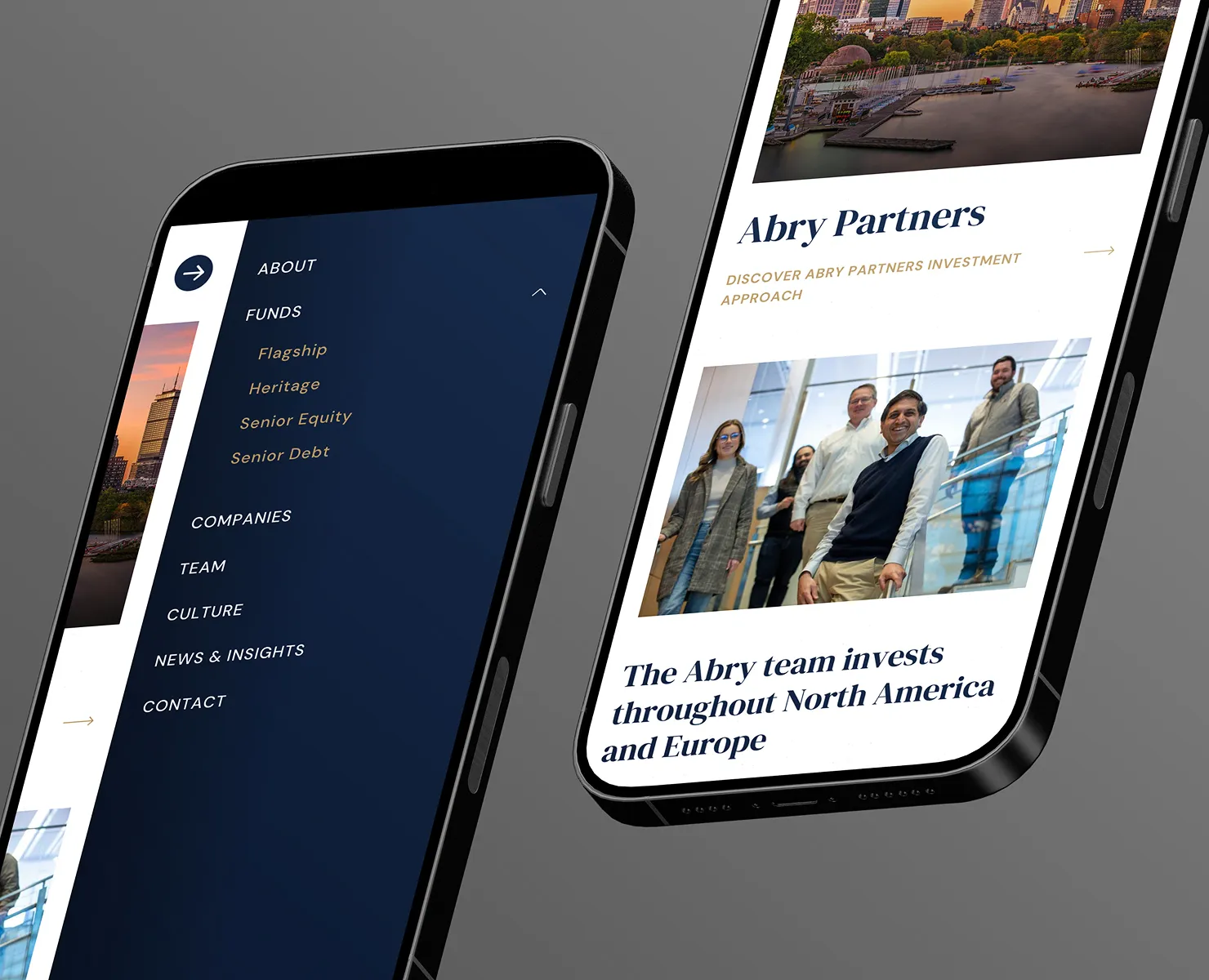
  • Prioritizing mobile for an audience that reads on the go. I designed the mobile experience in parallel with desktop from the start, ensuring that fund data, team pages, and key CTAs were as accessible on a phone as on a large monitor.

The Outcome

The redesigned abry.com delivers a site that functions as a genuine business development asset rather than a digital brochure. Investors can assess the firm's scale and focus within seconds of landing on the homepage. Portfolio companies can understand the firm's thesis and culture without digging, and the Abry team can maintain the site independently, keeping content current without routing every update through a developer.

Note: Specific traffic or conversion metrics were not tracked as part of this engagement. Post-launch feedback from the client indicated strong satisfaction with both the operational improvements and the reception from their network.

What I'd Do Differently

With more time and access, I would have pushed for user testing with at least a small group of actual LPs or portfolio company representatives before launch, even informal feedback sessions. The IA decisions were informed by stakeholder conversations, but real user validation would have given us more confidence in the navigation structure and reduced the number of judgment calls made on assumption.