Skip to Main Content

Linear Retail

Linear Retail is a New England-based commercial real estate firm specializing in convenience-driven retail properties. Their focus is revitalizing underperforming retail spaces like strip malls, convenience centers, and neighborhood retail, and connecting the right tenants to the right locations. Their website needed to work as a genuine business development tool for three demanding audiences—brokers sourcing space for clients, prospective tenants evaluating locations, and investors assessing the firm's portfolio and track record.


The Problem

The existing site had a clarity problem at multiple levels. The value proposition of what Linear Retail does, where they operate, and why they're the right partner wasn't immediately legible. For a firm with 20+ years of operating history, 73 properties, and 400+ tenants, the site wasn't communicating the scale or credibility of the business. More critically, the property discovery experience was broken for the people who needed it most: brokers and tenants. They arrive with specific criteria, like market, size requirement, and availability. They need to find matching properties quickly.

Discovery & Approach

Commercial real estate has three distinct user types who interact with a firm's website very differently, and designing for all three required understanding what each one needed to accomplish:

  • Brokers are efficiency-driven and time-pressured. They're often searching on behalf of a client with specific requirements. They need fast, filterable access to the property portfolio, like location, square footage, and availability with and enough detail to assess fit without picking up the phone.
  • Prospective tenants are evaluating a business decision. They want to understand the quality of Linear's properties, the types of tenants already in the portfolio, and whether Linear feels like a partner who understands their business. Success stories and tenant spotlights matter enormously to this audience as social proof from existing tenants reduces perceived risk.
  • Investors and partners are assessing organizational credibility. They want to understand portfolio scale, market reach, operating history, and the team behind the business. The stats and firm narrative need to do immediate work for this group.

These three audiences share a homepage but need different things from it. The IA challenge was designing a page that serves all three entry points.
Key Design Decisions

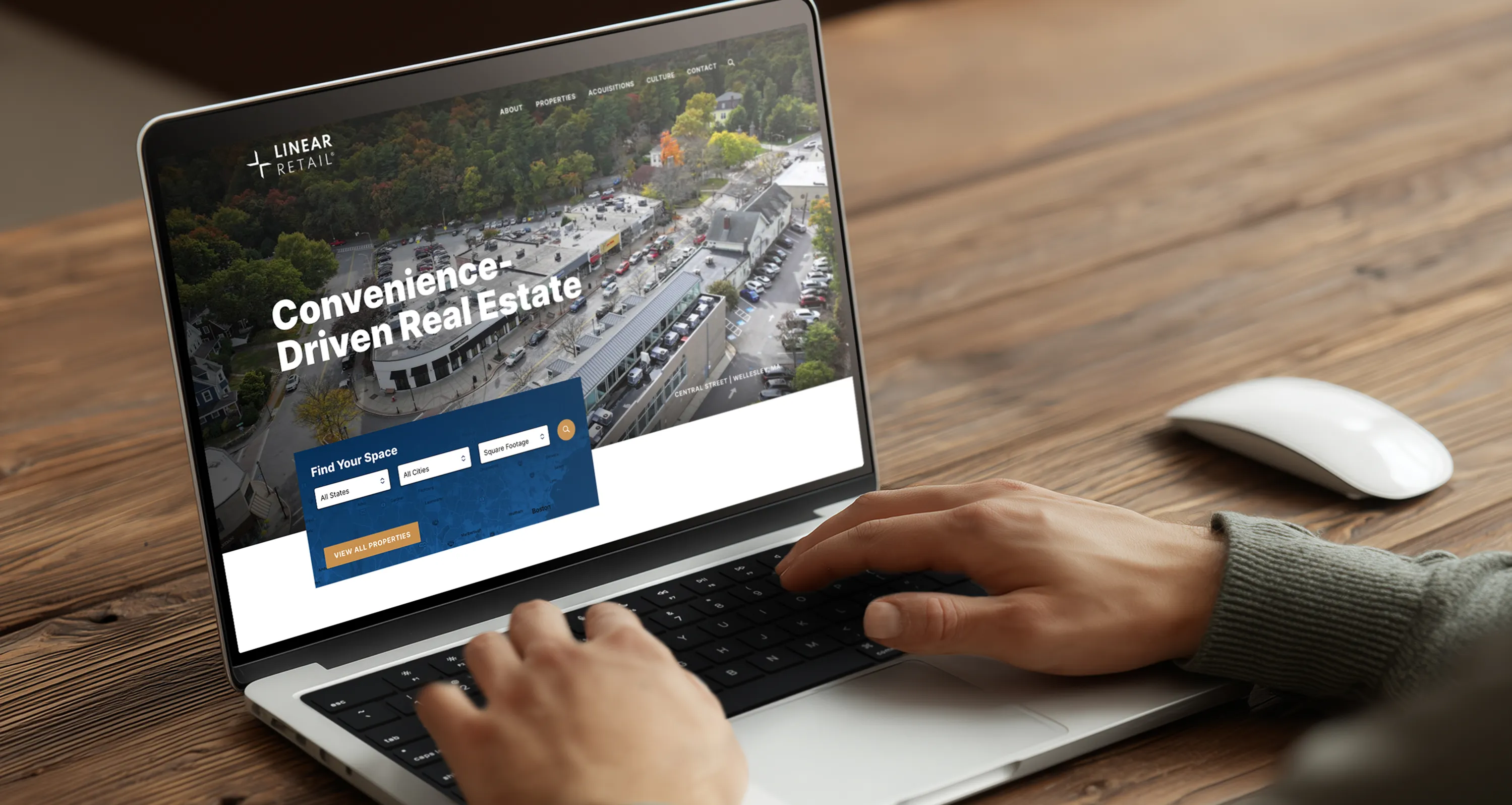
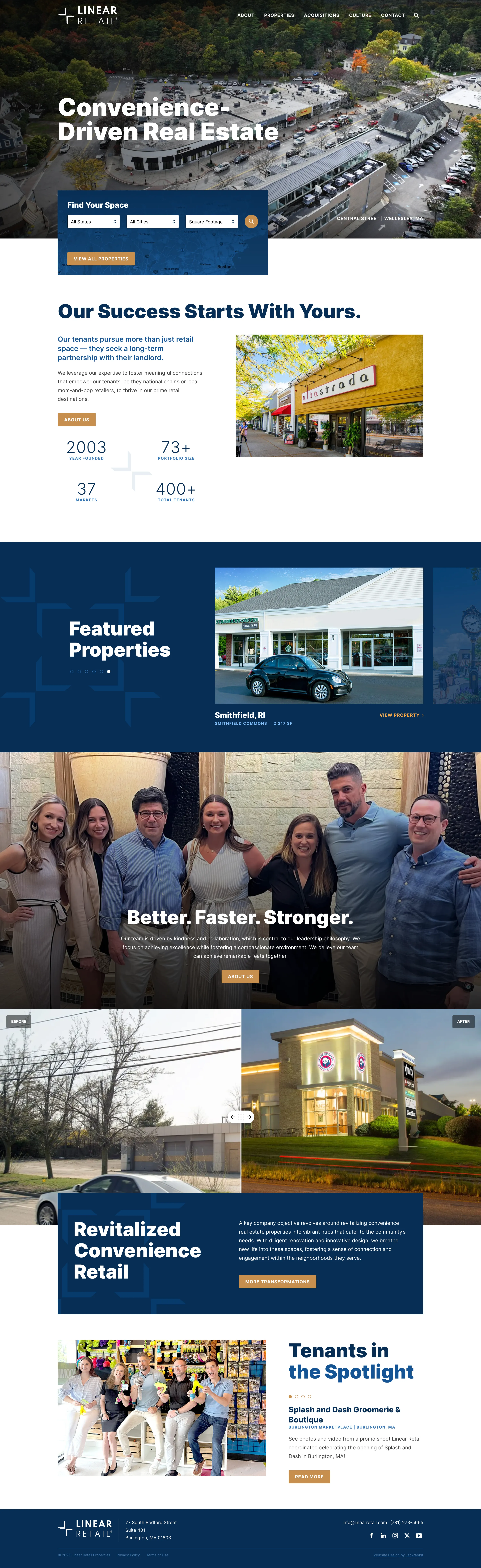
  • Leading with the search module as a primary homepage element. Rather than treating property search as a secondary feature buried in navigation, I designed the search interface into the hero section of the homepage. For brokers and tenants, this is the most valuable thing on the site. Putting it front and center signals that Linear understands what their users actually come to do.
  • Using the tenant spotlight to build trust with prospective tenants. The "Tenants in the Spotlight" section and success stories serve a specific conversion function, showing prospective tenants what it looks like to operate out of a Linear property.
  • Establishing visual credibility through property photography. Convenience retail is a physical business. The design leans heavily on high-quality photography of actual Linear properties to communicate the quality and scale of the portfolio in a way that copy alone cannot.
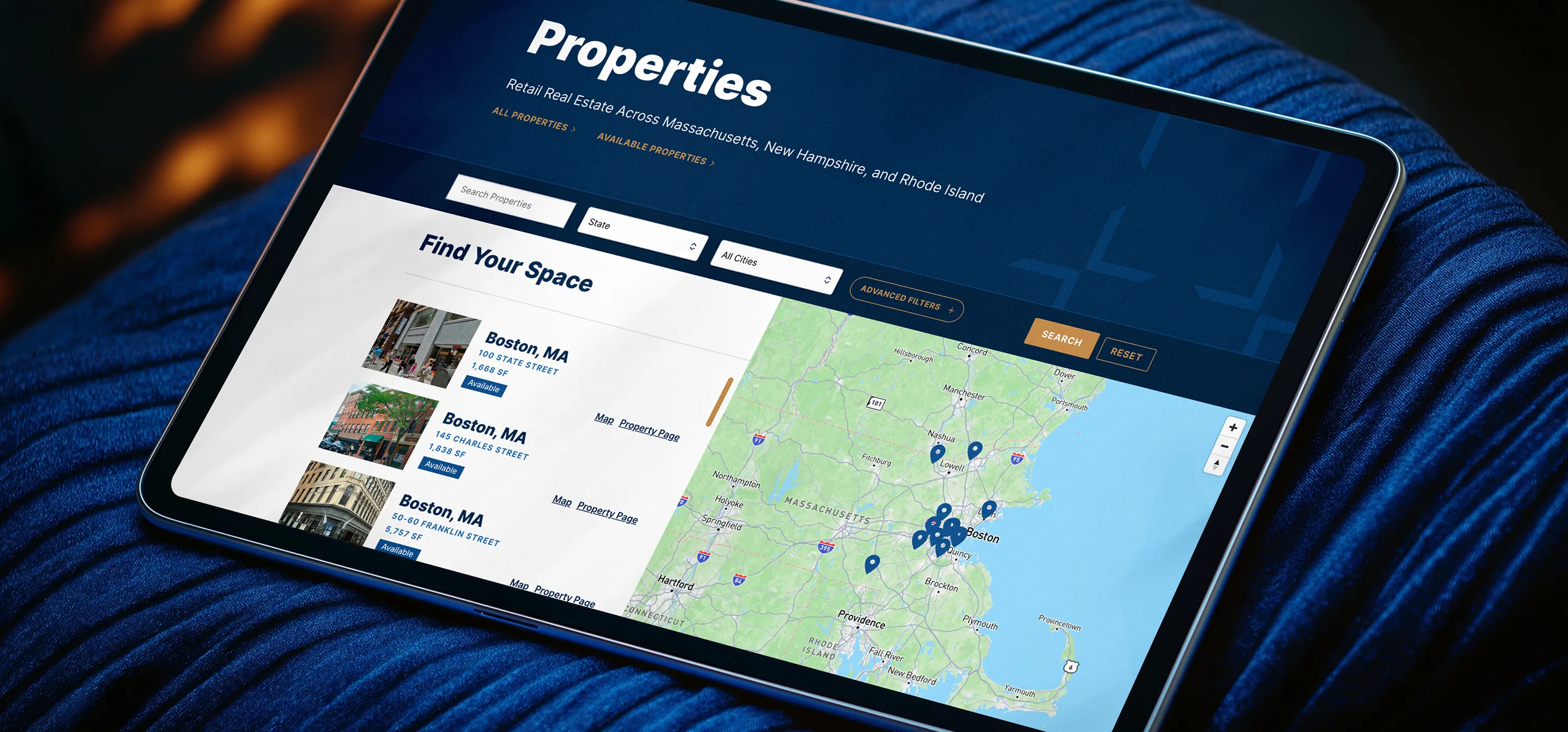
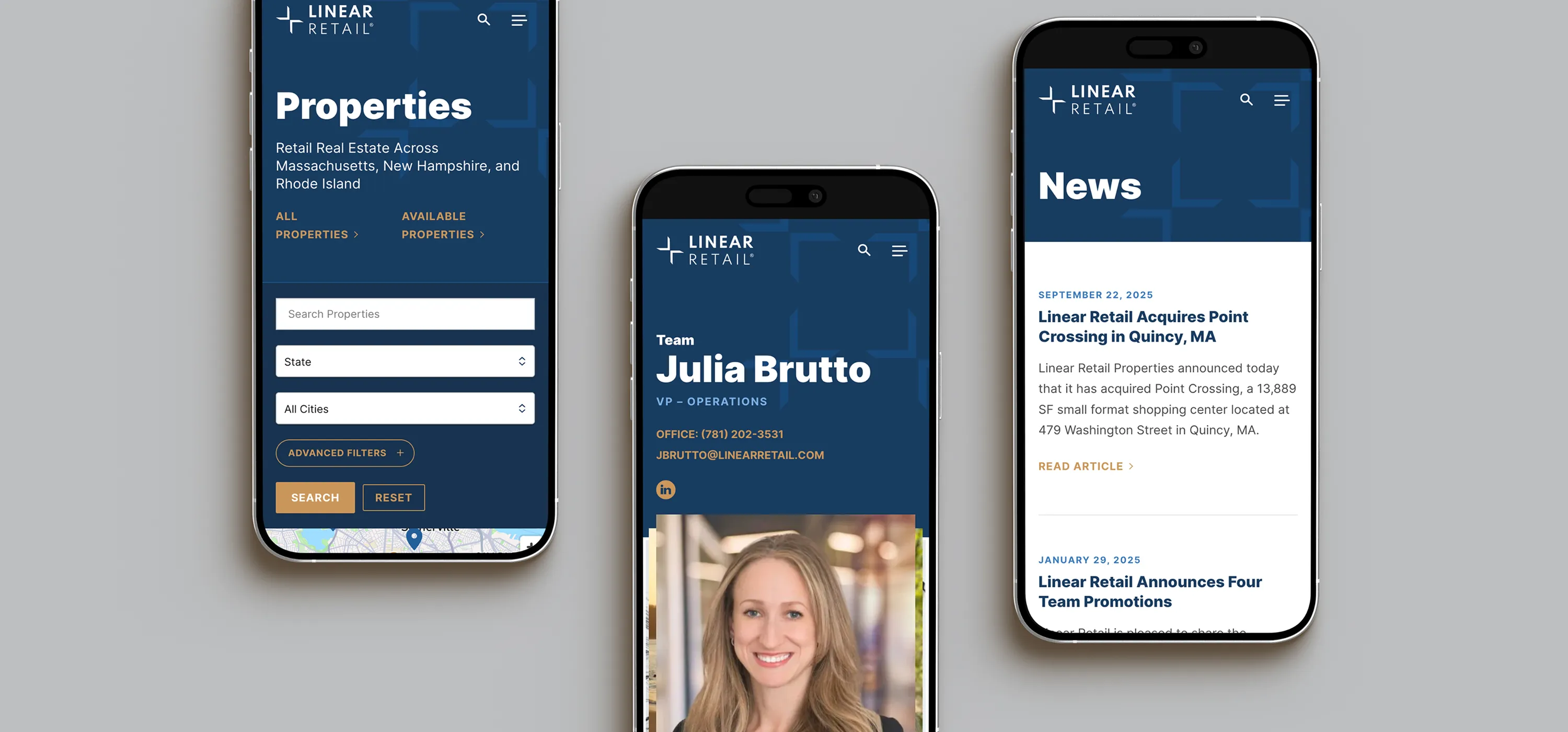
  • Designing the property search for cross-device use. Brokers often work on laptops in the field. Tenants research on phones. The search module and property listings were designed to be fully functional across desktop, mobile, and tablet.

The Outcome

The redesigned Linear Retail site functions as a legitimate business development asset. Brokers can search and filter available properties in seconds. Prospective tenants can explore the portfolio, read tenant success stories, and assess whether Linear is the right partner for their business. Investors and partners see an organization with 20+ years of operating history, a substantial portfolio, and a credible, professional presence that reflects the quality of the underlying business. The map-based property browser on tablet in particular represents a meaningful UX improvement giving users geographic context for a portfolio that spans 37 markets across New England.

Note: Post-launch conversion metrics were not tracked as part of this engagement.

What I'd Do Differently

The property search module is the most functionally important element on the site, and I'd want to validate it more rigorously with actual brokers before launch. Search UX can be difficult to get right with filter options, the right default state, the right behavior when searches return no results. Informal testing with even two or three working brokers would have surfaced edge cases that are hard to anticipate from the inside.